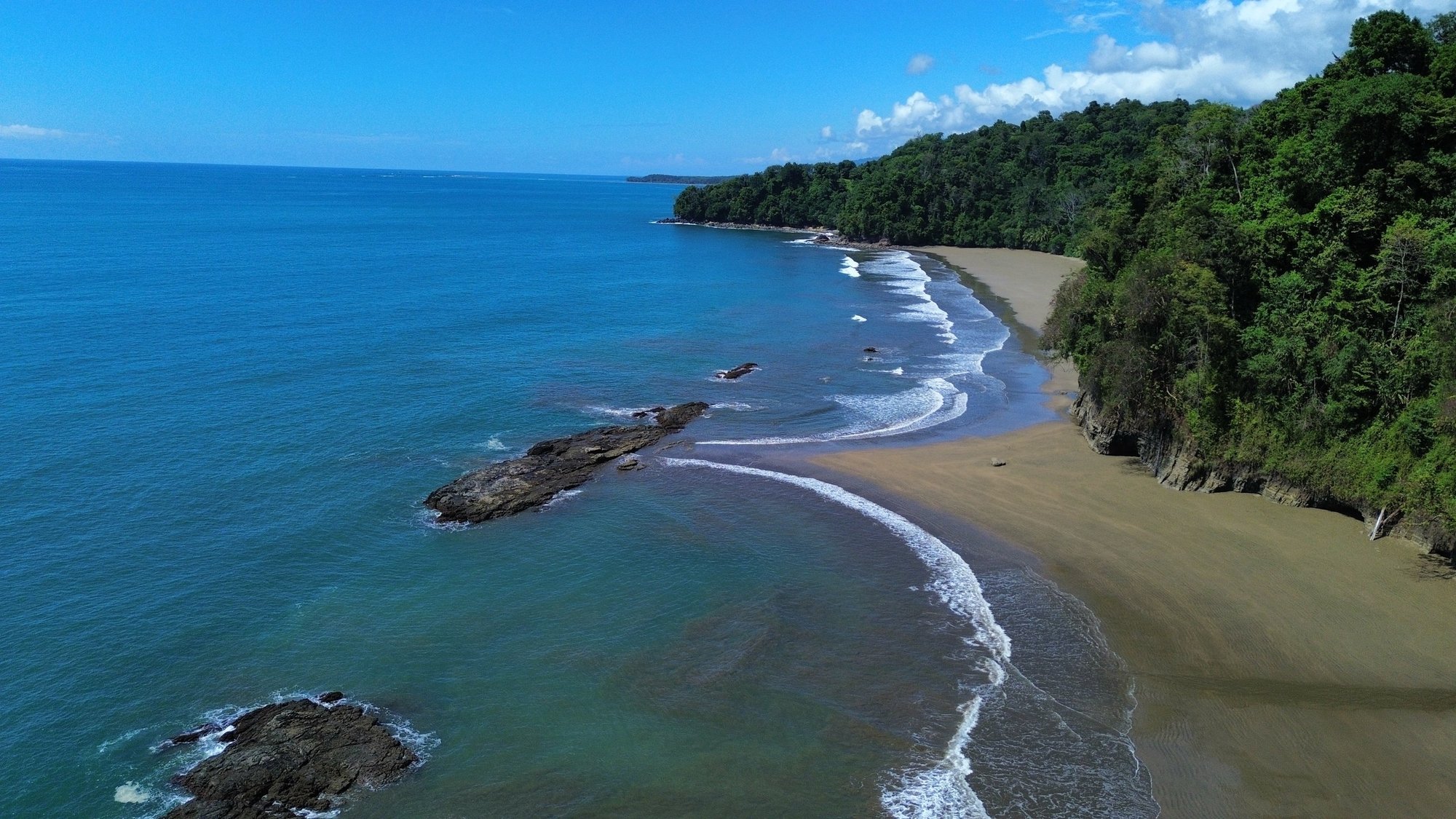
In southern Costa Rica, Marino Ballena National Park is famous for a unique natural feature: the Uvita whale tail, a strip of sand and rock that, at low tide, draws a whale’s tail in the ocean. But the park is also miles of palm-lined beaches, coral reefs and above all the waters where humpback whales come to give birth every year. In this guide we explain how to see the whale tail (Punta Uvita) without missing the tide, which entrance to choose, the entrance fee, opening hours, where to snorkel and when to see whales.
Wildlife you can see
What is Marino Ballena National Park?
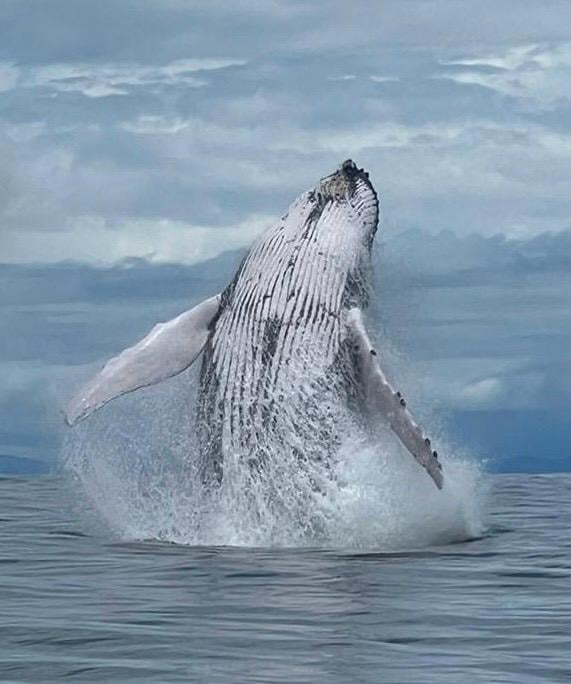
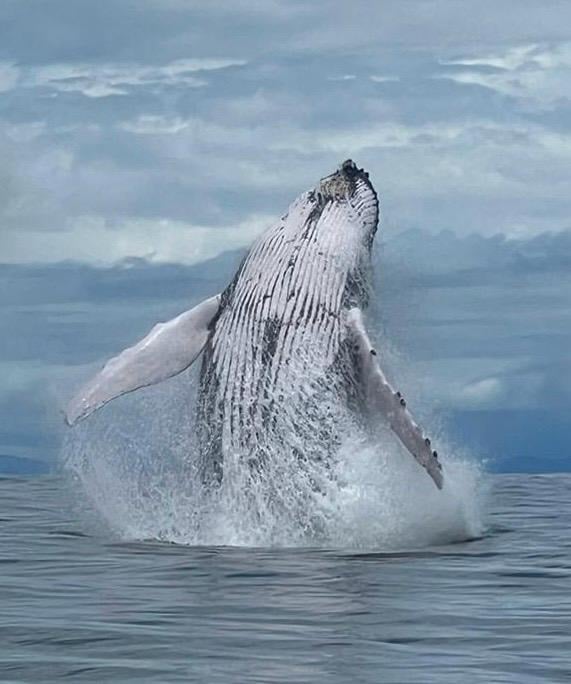
Created in the late 1980s, Marino Ballena is one of Costa Rica’s first marine national parks. As its name says (“ballena” means whale), it was created to protect humpback whale breeding grounds, where whales come to mate, give birth and nurse their calves.
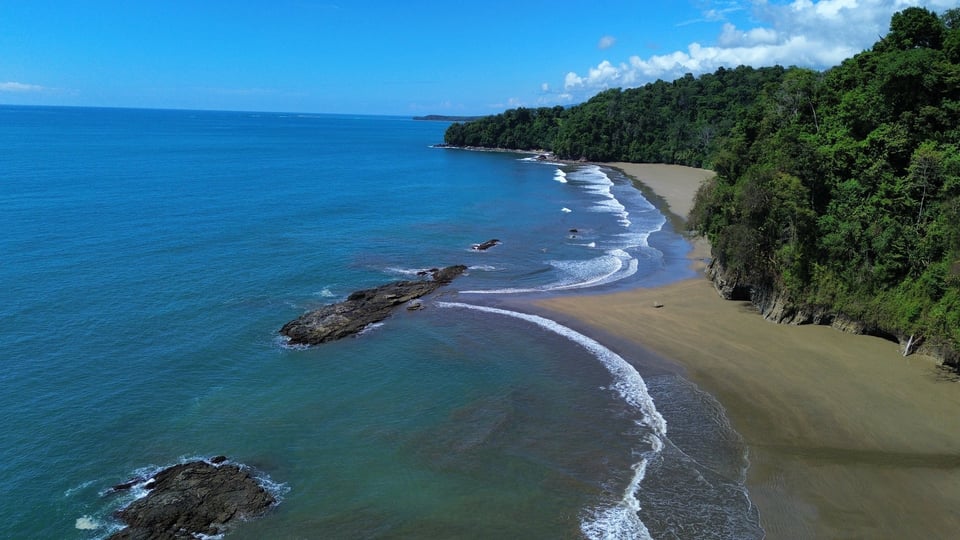
The park is mostly ocean: it protects over 5,000 hectares of sea and only a narrow strip of coast about 15 km long, from Uvita to Punta Piñuela. Offshore lie Ballena Island and the Tres Hermanas islets, surrounded by coral reefs among the most important on Central America’s Pacific coast.
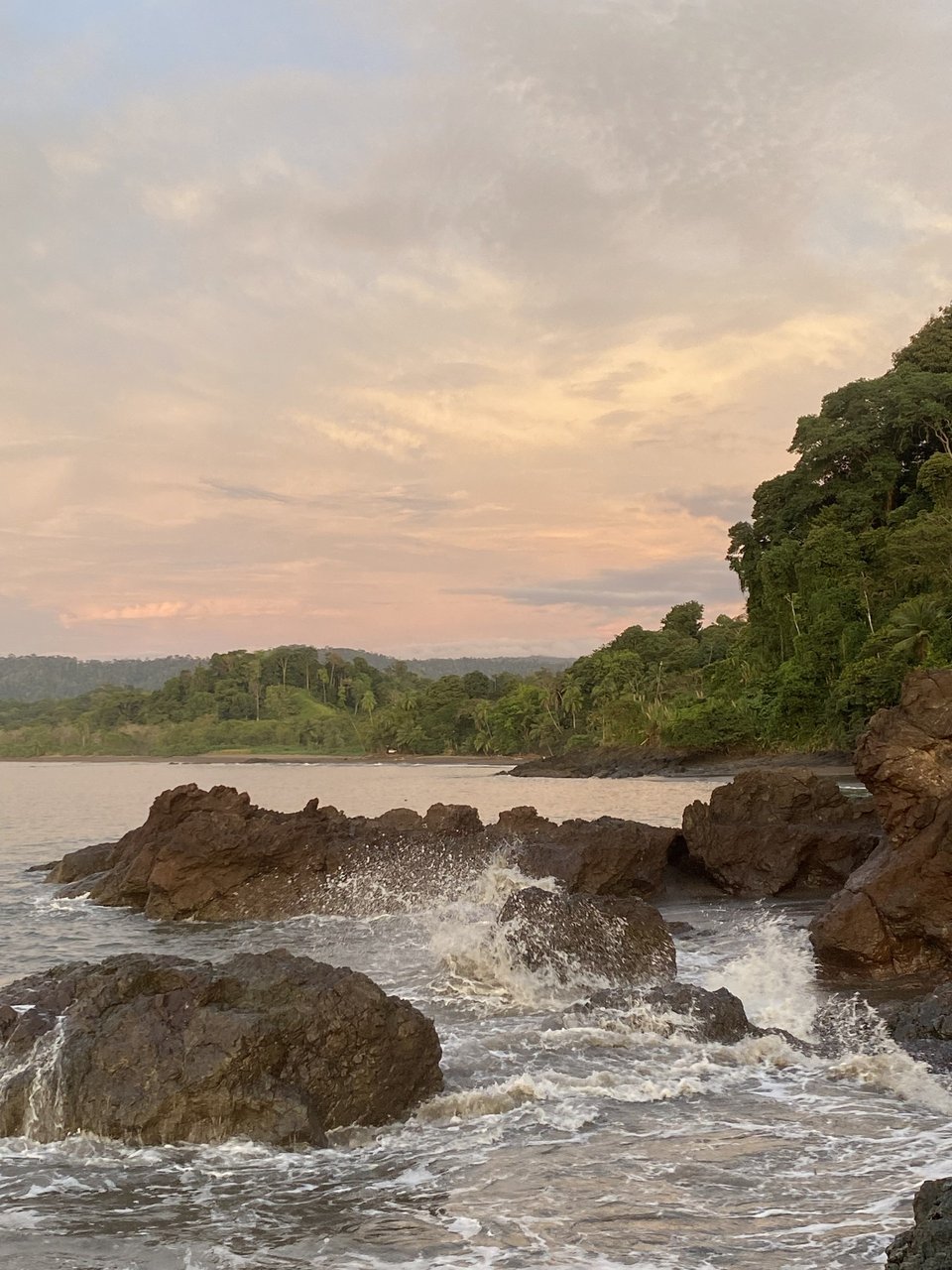
On land, it is a string of wild beaches lined with coconut palms and almond trees, with no buildings, where you meet crabs, iguanas and seabirds (frigatebirds, pelicans). From May to November, olive ridley and hawksbill turtles also nest at night on some of the park’s beaches. Between the beaches, small mangrove-lined estuaries shelter herons and ibises.
How to see the Uvita whale tail (Punta Uvita)
The whale tail is a tombolo: a sandbar linking the beach to a rocky islet, Punta Uvita. At low tide it emerges and forms, seen from above, a perfect whale’s tail, with a beach on each side. At high tide it almost disappears under water.
The golden rule: check the tide table before you go (any tide app or website for “Uvita” or “Bahía Ballena”). The right window is about two hours before and two hours after low tide. Start walking as the tide goes out: from the Uvita entrance, allow about 30 minutes’ walk to the point.
- The best tides are around full and new moon: the sea goes out further and the tail is wider.
- Do not linger at the tip when the tide comes back in: the sandbar floods fast, and currents can be strong on the sides.
- To see the tail shape, you need height: many lodges and restaurants in the Uvita hills overlook it. Drones are banned in the park without a special permit.
- From the sea, whale watching tours often pass in front of the whale tail: another way to admire it.
Park entrances and beaches
The park has four sectors, each with a ranger station. One ticket per day gives access to every open sector.
- Uvita sector (Playa Uvita): the main and busiest entrance, with ticket office and restrooms. This is the whale tail entrance. Whale watching boats also leave from this beach.
- Colonia sector (Playa Colonia): a few minutes south, a big, quieter beach, popular for swimming and picnics when the sea is calm.
- Ballena sector (Playa Ballena): a long wild beach. From here you reach little Playa Arco, with its rocks and arch, accessible at low tide only.
- Piñuela sector (Playa Piñuela): the furthest south, small and sheltered. It is often closed: check before you go.
- Do not confuse: famous Playa Ventanas and its caves, about 12 km south of Uvita, is not part of the park. It is accessed via a parking lot run by a local association.
Marino Ballena entrance fee and opening hours
Fee: about $6 + tax (~$7) per foreign adult. Free for under-12s and over-65s. Costa Ricans and residents pay a reduced fee in colones. You buy the ticket at the entrance, and payment is by card only: no cash.
Hours: the park opens every day at 7am. Closing depends on the sector and period: usually 4pm, and up to 6pm at the Uvita and Colonia entrances depending on the season. Hours have changed several times in recent years, so check at the entrance and do not plan to arrive late in the day.
Parking: the lots in front of the entrances are private, about 2,000 to 4,000 colones for the day. Leave nothing visible in the car.
Can you snorkel in Marino Ballena?
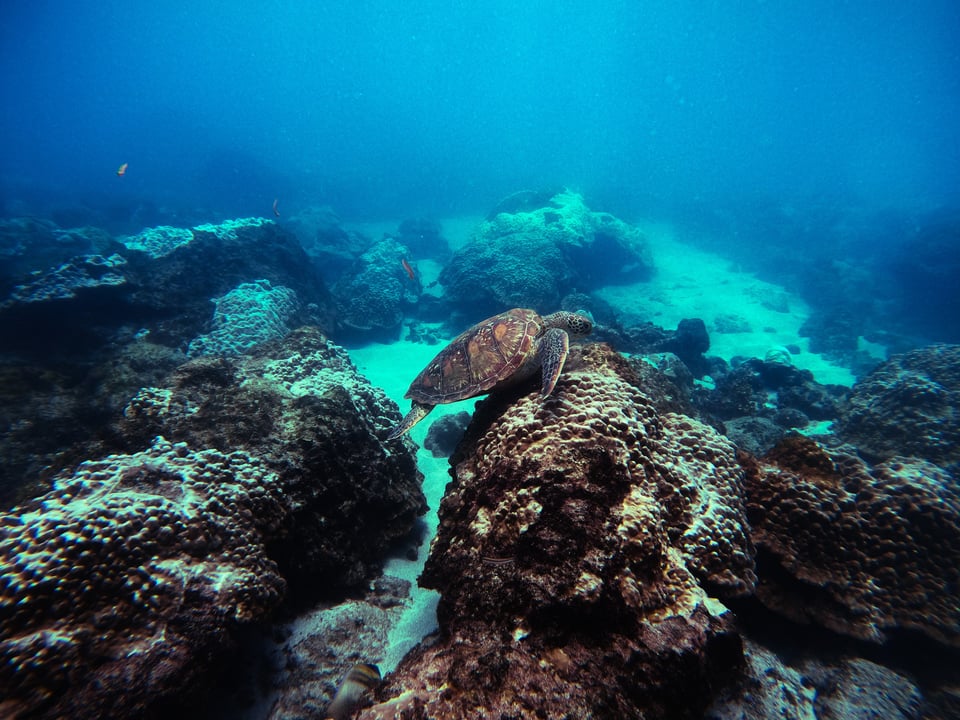
Yes, with realistic expectations. From the beach, the best spot is the rocky tip of the whale tail, at low tide and in calm seas. You can see reef fish, sometimes rays. Fins are not allowed and there is no rental on site: bring your mask, snorkel and water shoes.
The best spots are around Ballena Island and the Tres Hermanas islets, reachable only by boat. Visibility is best from January to April, about 5 to 10 meters on good days; in rainy season, rivers cloud the water. Several Uvita operators run 1–2 hour guided boat trips to these islets, depending on the sea.
If snorkeling is your priority, Caño Island is a step above: clearer water, turtles, reef sharks and huge schools of fish. Our Caño Island day is $145 per person, with 2 snorkel stops of about 40 minutes, gear and a beach buffet.
When to see whales in Marino Ballena
The park is lucky to host two humpback whale populations, so two seasons a year:
- December to March: Northern Hemisphere whales (California, North Pacific), with January and February often the best months. It is also the dry season.
- July to November: Southern Hemisphere whales from Antarctica, peaking in August and September, with many mothers and calves.
- All year: spotted and bottlenose dolphins are seen regularly.
- The Whale and Dolphin Festival is usually held in September in Uvita and Ojochal.
How to go whale watching in Marino Ballena
From the beach you sometimes see a distant blow, but to really see whales you need a boat. Tours leave straight from Playa Uvita, inside the park: you board with wet feet. Captains follow Costa Rican rules: minimum distance, no chasing, limited viewing time.
We book for you with local captains and guides: shared half-day tour at $120 per person, or private boat for up to 4 at $350 (2.5 h, 11am–1:30pm). Dolphins often join in, and the boat usually passes the whale tail. No tour can guarantee a sighting 100%, but in peak season the odds are very good.
How to get to Marino Ballena National Park
The park is in Uvita, on the Costanera (Route 34), the highway along the southern Pacific coast. All entrances are signposted from the road, north to south: Uvita, Colonia, Ballena, then Piñuela.
From San José: allow about 3.5 to 4 hours’ drive via Route 27 then Route 34, through Jacó and Quepos. Tracopa buses also run from San José to Uvita in 4 to 5 hours (about $10–12), as do shared and private shuttles.
Locally: from Uvita center the main entrance is a few minutes by car, or on foot if you stay near the beach. Dominical is 15–20 minutes north, Ojochal about 20 minutes south. Manuel Antonio is about 1 hour away: many travelers do a day trip to see the whale tail, but we recommend staying one or two nights so you can pick the right tide.
How long? Half a day is enough for the whale tail. Add a morning for whale watching in season, and an afternoon to explore Colonia or Playa Arco at low tide.
Our tips for visiting Marino Ballena
The park is easy to visit, but a few details make all the difference. Here is what we tell all our travelers:
- Plan your day around low tide, not opening time. If low tide is in the afternoon, do something else in the morning.
- Bring a card: the entrance cannot be paid in cash.
- There is no restaurant in the park: bring water, fruit and a picnic, and take your trash back.
- Shade and protection: hat, rash guard and mineral sunscreen, kinder to reefs.
- Water shoes or sandals for the rocks and dead coral at the end of the whale tail.
- Careful in the water: some beaches have rip currents. No swimming alone or when the sea is rough.
- No dogs or drones in the park. Keep your distance from animals and do not feed them.
- Come early: better light, less heat and nearly empty beaches.
See all our Costa Rica tours and prices →
Frequently asked questions
How much is Marino Ballena National Park?
About $6 + tax per foreign adult, card only. Free for under-12s and over-65s.
What time can you see the whale tail in Uvita?
At low tide, about two hours before and after. Check the tide table: it changes every day.
What are Marino Ballena’s opening hours?
The park opens at 7am. It usually closes at 4pm, and up to 6pm at the Uvita and Colonia entrances depending on the period.
Which Marino Ballena entrance should I use?
The Uvita entrance for the whale tail. Colonia for a calmer beach, Ballena to reach Playa Arco at low tide.
Can you swim in Marino Ballena?
Yes, especially at Colonia and near the whale tail when the sea is calm. Watch out for currents and avoid swimming alone.
Can you see whales from Uvita beach?
Sometimes a distant blow, but to see them properly you need a boat, from December to March or July to November.
Is Playa Ventanas part of Marino Ballena?
No. Playa Ventanas and its caves are about 12 km south of Uvita, outside the park, with a paid community parking lot.