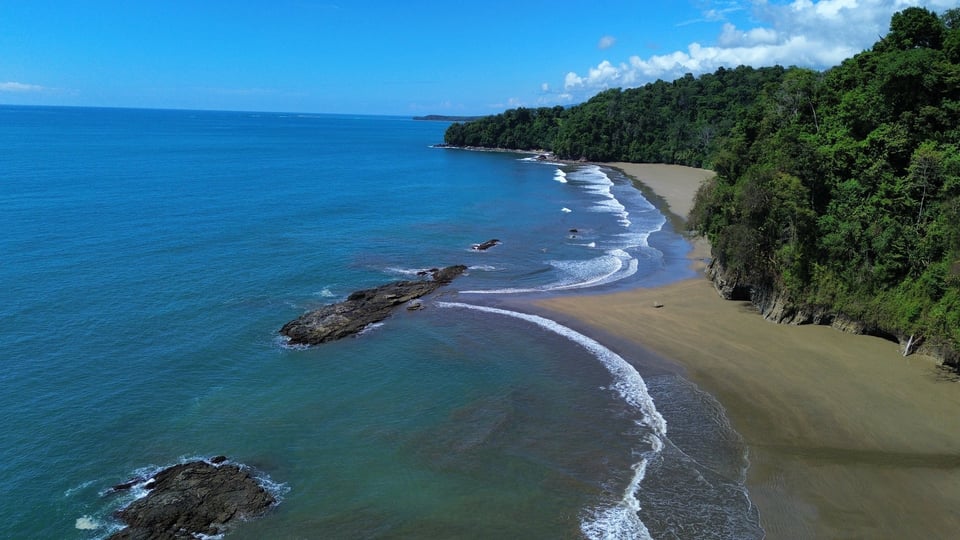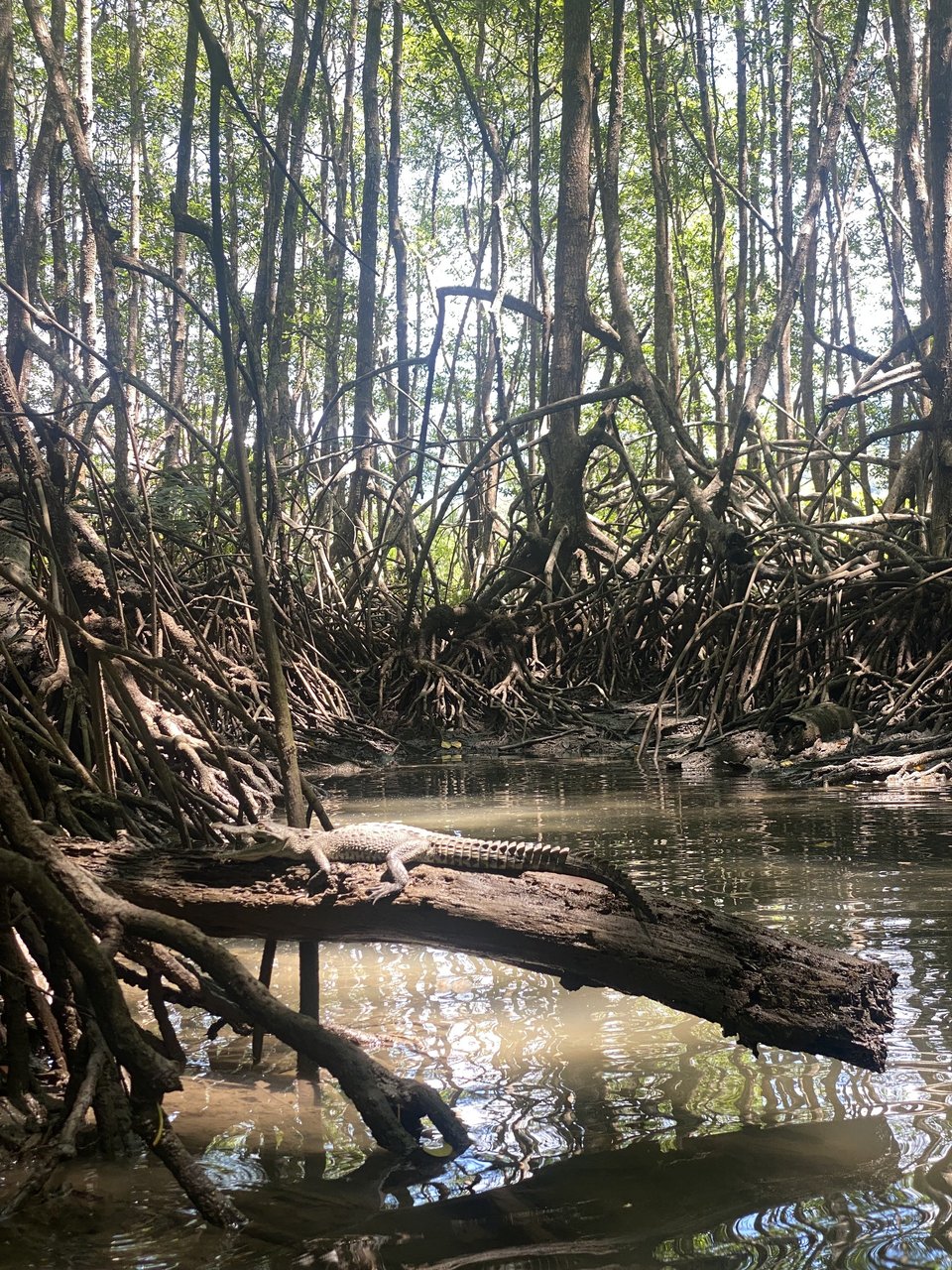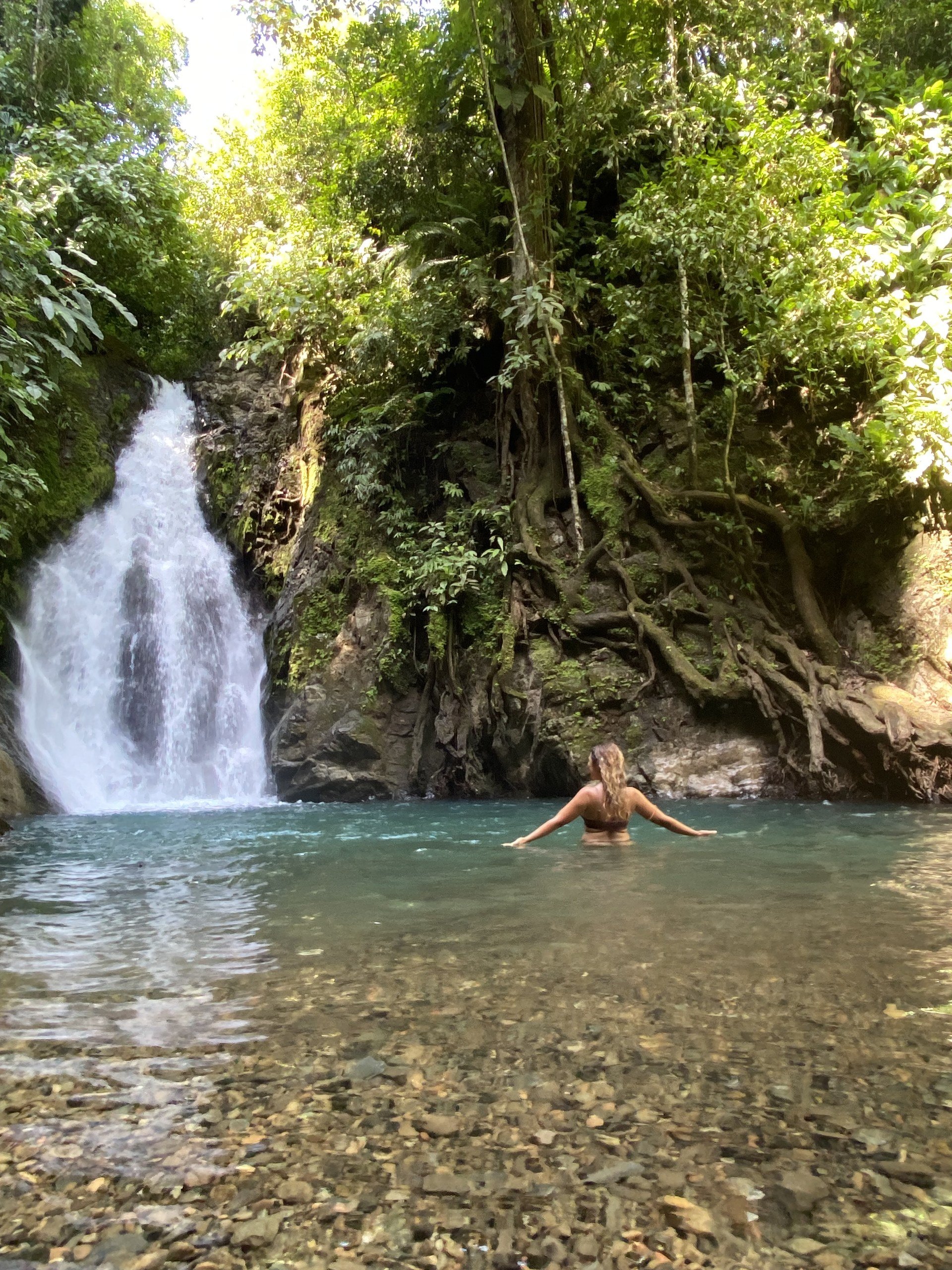
Between Dominical, Uvita and Ojochal, the Fila Costeña mountains drop almost straight into the ocean. The result: the southern Pacific coast is one of the richest waterfall regions in Costa Rica. Some are famous, like Nauyaca Waterfalls and its two spectacular drops. Others are five minutes from the village, like the Uvita waterfall (Catarata Uvita) and its natural water slide. Others are on no map at all. Here is how to get there, what it costs, when it is safe to swim and what to pack.
Wildlife you can see
Nauyaca Waterfalls: how to get there and what it costs
Nauyaca Waterfalls (Cataratas Nauyaca) are the region’s star. They are in the hills between Dominical and San Isidro de El General, along Route 243, about ten kilometers from Dominical. From Uvita, allow about 40 minutes’ drive. There are two drops: an upper fall of about 45 to 50 meters (150–165 ft) and a lower fall of about 20 to 25 meters that pours into a big natural pool where you can swim.
Careful: there are two different access points, run by two different owners. Both lead to the same pool, but the experience differs:
- Cataratas Nauyaca (the original access, on Route 243): self-guided hike for about $10 per person, plus about $5 parking. From the lot, allow about 4 km each way, so 8 km round trip, on a hilly farm track (not the “easy 6 km walk” you sometimes read). Rather not walk? A 4x4 shuttle drops you 150 meters from the falls, from about $32 (parking included), with limited time on site. Horseback rides are also offered.
- Nauyaca Waterfalls Nature Park (the other, higher access): you walk down about 2.7 km or take a tractor-pulled shuttle. Allow about $28–33 to walk down and ride back up, and about $38 for the shuttle both ways.
Nauyaca: hours, swimming and practical tips
Both accesses open early (around 7–7:30am). The falls usually close around 3:30pm, and last entries or shuttles leave earlier (around 2–2:30pm for the 4x4). Arrive before 9am: it is cooler for walking, and you will have the pool almost to yourself before the groups.
Swimming is in the lower fall’s pool. No swimming under the upper fall. A lifeguard is often there to remind people of the rules. Rock jumps happen only with a guide, when the site allows it. After heavy rain the pool can become dangerous and access may close.
Our tip: if you are fit, walk in and save energy for the climb back, which is the hardest part. With young kids or in big heat, the 4x4 is well worth it. Wear hiking shoes for the track and water sandals for the slippery rocks at the pool.
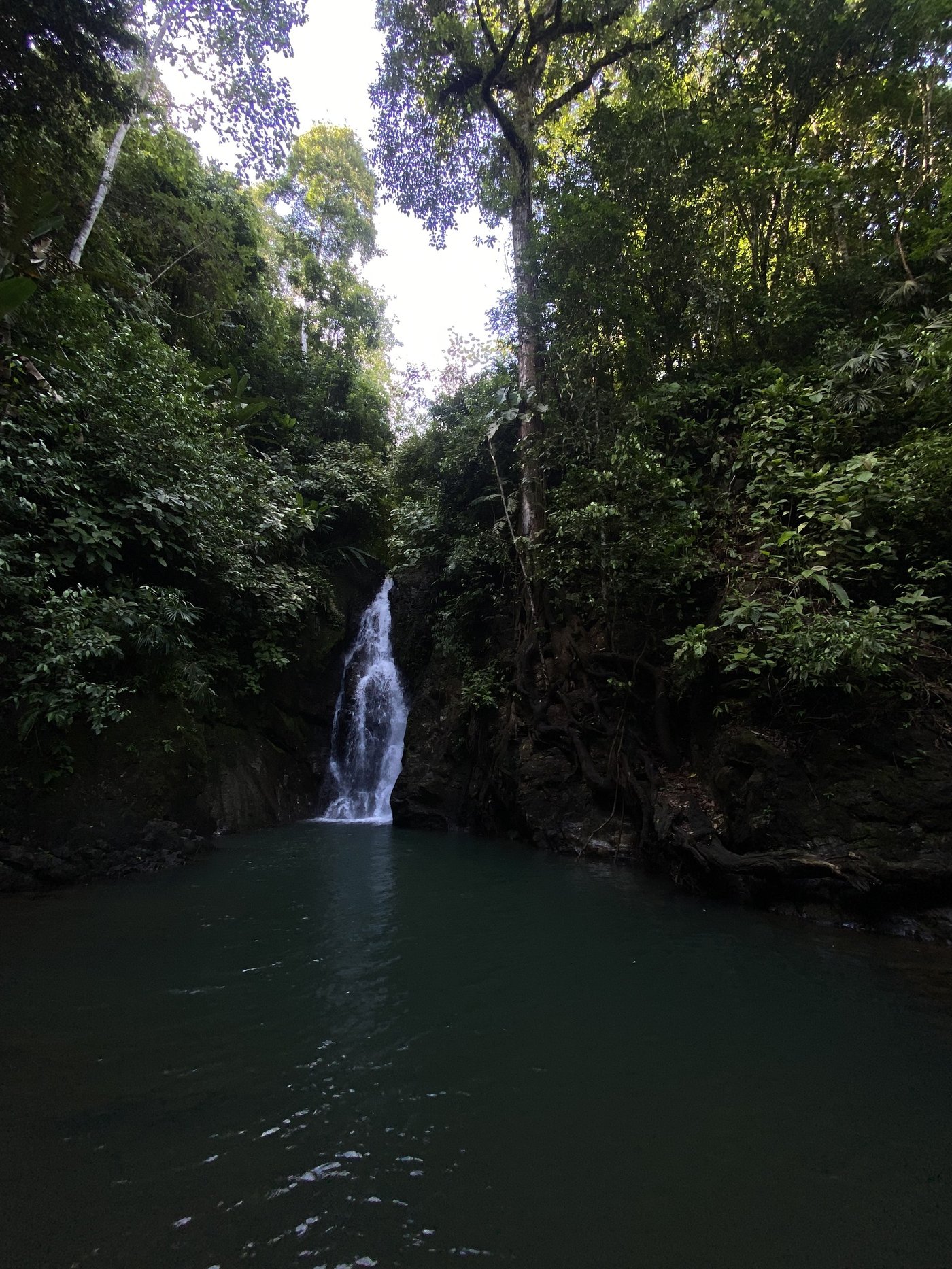
Uvita waterfall (Catarata Uvita): the natural water slide 5 minutes from the village
This is the easiest waterfall to reach in the area. Catarata Uvita is about 5 minutes’ drive from Uvita center: from Route 34, take the street by the bank (Banco de Costa Rica), head inland, then turn onto the Bejuco road. Two entrances follow each other: Catarata Esmeralda (flatter path along the river) and, higher up, the original Catarata Uvita entrance (steep, slippery dirt steps, about 5–7 minutes down).
The fall is modest — about 7.5 meters (25 ft) according to the sign on site — but it has an ace: smooth rocks at the top form a natural water slide ending in the pool. Always watch someone go first, and skip it if the current is strong. Entrance is about 2,000 colones (~$4) per person, and the site is open every day, usually 8am to 5pm. There is a small restaurant, restrooms and basic changing rooms.
It is the perfect spot for a quick swim after the beach or late in the day, and a good first waterfall with kids, as long as you stay in the calm pools downstream. Avoid weekend afternoons, when many Costa Rican families come, and leave nothing valuable in the car.
El Pavón waterfall near Ojochal (and other southern waterfalls)
South of Uvita the coast hides more low-key waterfalls. Here are the ones really worth the detour — and a reality check on some names you will see online.
- El Pavón waterfall (Cascada El Pavón): about 20 minutes south of Uvita, near Ojochal, at the end of a few kilometers of dirt road. It is famous for a big round boulder wedged between two rocks, with water flowing underneath. The walk is very short (a few minutes, slippery steps). Access was free at last check, but there are no facilities (no restrooms or guarded parking). The main pool has current: the small pools downstream are better for kids. People sometimes search for it as “Pavones waterfall”, not to be confused with the surf village of Pavones, much further south.
- Diamante Waterfalls (Cataratas Diamante): in the mountains above Dominical, toward Tinamaste, about 35 minutes from Dominical. The main drop is about 183 meters (600 ft), one of the tallest in the country, with a cave behind twin falls. It is private land: visits are guided tours only, and the hike is demanding (about 2.5 hours). For experienced hikers.
- “Poza Azul” and “Bejuco waterfall”: watch out for namesakes. Costa Rica’s best-known Poza Azul is in the Sarapiquí area, in the north, not near Uvita. And Bejuco is the name of the road to the Uvita waterfall, not a separate waterfall.
Our waterfall hikes: the “secret waterfall” and the “quiet waterfall”
Beyond the well-known sites, we book two guided hikes to waterfalls off the tourist trail, with local guides who know the landowners. We keep the locations to ourselves — that is exactly what protects them from crowds — but here is what to expect:
- Secret waterfall hike — $45 per person, about 3.5 h. A real jungle hike, wilder, ending with a swim at a waterfall you will not find on any app.
- Quiet waterfall hike — $40 per person, about 3 h. Gentler, perfect for a relaxed pace or families, with time to enjoy the pool.
- Optional transfer from your lodging: tell us where you stay and we will quote it.
When to visit the waterfalls: dry or rainy season
From December to April (dry season) the water is clearer, tracks are passable and swimming is usually safe. Flow drops late in the season (March–April): the falls are less powerful, but the pools calmer.
From May to November (green season) the waterfalls are at their most spectacular, with lots of water and an intensely green forest. The trade-off: water often turns brown and currents get strong, especially in the afternoon when storms break over the mountains. September and October are usually the rainiest months on the southern coast. Go in the morning: it rarely rains before noon.
Safety: flash floods are the real waterfall danger
The risk is not the waterfall itself, it is the flash flood (“cabeza de agua” in Spanish). It can be sunny at the pool while a storm falls upstream in the mountains: within minutes the water rises, turns murky and the current becomes violent. A few simple rules:
- Water turning brown, carrying leaves or branches, or the falls getting louder? Get out immediately and move away from the riverbed.
- Never jump without checking depth, and never after rain: rocks may have shifted.
- Do not climb the rocks at the top of the falls: moss makes them extremely slippery.
- In rainy season, avoid waterfalls in the afternoon and give up if heavy clouds cover the mountains.
- Respect closures: if a site closes after heavy rain, there is a reason.
What to bring for a waterfall day
- Water sandals or aqua shoes: essential on slippery rocks.
- Hiking shoes for Nauyaca and forest hikes.
- Swimsuit under your clothes, a microfiber towel and a spare t-shirt.
- At least 1.5 liters of water per person and a snack.
- Bug spray and mineral sunscreen.
- A dry bag for your phone, and colones in small bills: some entrances and parking lots take cash only.
- A snorkel mask if you want to watch the fish in the pools.
See all our Costa Rica tours and prices →
Frequently asked questions
How much is Nauyaca Waterfalls?
At Cataratas Nauyaca, about $10 per person on foot (plus about $5 parking), or from about $32 with the 4x4 shuttle. At the Nature Park, allow about $28–38 depending on the option.
How long is the hike to Nauyaca Waterfalls?
From the original access parking, about 4 km each way (8 km round trip), usually a good hour each way. The climb back is the hardest part.
Can you swim at Nauyaca Waterfalls?
Yes, in the lower fall’s pool, which is big and deep. Not under the upper fall, and not after heavy rain, when access may close.
How far is Nauyaca from Uvita?
About 40 minutes’ drive, via Dominical and Route 243 toward San Isidro.
What is the closest waterfall to Uvita?
Catarata Uvita, about 5 minutes from the center, with its natural water slide. Entrance is about 2,000 colones (~$4).
Is El Pavón waterfall free?
Yes, access was free at last check, but there are no restrooms or guarded parking. Bring a few colones in case a private lot charges.
Can kids do Nauyaca Waterfalls?
Yes, with the 4x4 shuttle, which drops you 150 meters from the falls. On foot, the hilly 8 km round trip is long for young kids.